Every conversation about manufacturing an outdoor product line eventually reaches the same fork: OEM or ODM. The acronyms get used interchangeably, and they should not be, because they describe opposite answers to the most important question in the room: who owns the design?
The distinction in one paragraph
Under OEM (original equipment manufacturing), you bring the complete design and specification, and the factory executes it. The IP is yours, the tooling is typically yours, and the product exists nowhere else. Under ODM (original design manufacturing), the manufacturer owns proven platform designs and adapts them to your requirements, your brand, and your market. You get to market on engineering that already works.
What OEM really costs and buys
OEM is the path of maximum control, and control has a bill attached:
- Upfront investment. Tooling and engineering setup run well ahead of first revenue, and molds for die-cast outdoor fixtures are serious capital.
- Time. A ground-up design has to be engineered, prototyped, tested, and certified before a single unit ships.
- Internal capability. Someone on your side has to own the specification, which usually means engineering staff or a design partner.
What you buy with all that: unlimited customization, genuine differentiation no competitor can source from a catalog, and IP that compounds into company value. For proprietary technology or a premium positioning built on unique product, OEM is not the expensive option; it is the only honest one.
What ODM really costs and buys
ODM inverts the trade. Setup costs drop, timelines compress, and the certifications often already exist on the base platform. The cost is exclusivity: the core design belongs to the manufacturer, and versions of it may exist under other brands in other channels.
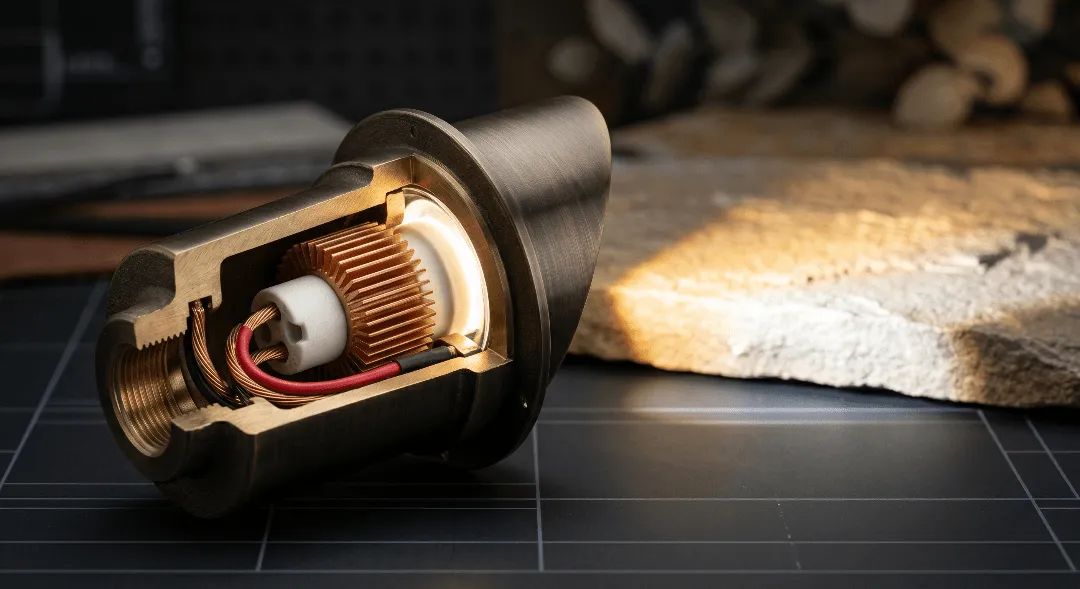
That trade is far better than it sounds when the platform can be genuinely adapted. Custom tooling on a shroud or stem, your finish, your acoustic tuning, your packaging, and your spec sheet produce a product that is recognizably yours even where the engineering underneath is shared. The question to ask an ODM partner is not “is this exclusive?” but “how deep can the adaptation go?”
Quality control differs more than people expect
Under OEM you control the specification, which means you also carry the burden of policing it. Batch inspections, sample approvals, and factory oversight need to be someone’s actual job. Under ODM the manufacturer’s established standards and existing test history do most of that work, and your control point is the approval gate.
Either way, insist on one non-negotiable: a golden sample you sign before mass production starts, with every batch measured against it. It is the single control that makes the rest of the QC conversation real.
A practical way to choose
Choose OEM when:
- You own proprietary technology or a differentiated design worth protecting
- Your positioning depends on product nobody else can offer
- You have, or will hire, the engineering capability to own a specification
Choose ODM when:
- Speed to market matters more than design exclusivity
- You know your channel and your price points better than you know electronics
- You are validating a category before committing to custom tooling
- Your line needs to expand fast without an engineering hire per SKU
And remember the fork is not permanent. A common arc starts with ODM to prove the category, then graduates the winners to OEM tooling once volume justifies the investment.
Ask about the seams
Whichever path you take, the risks live in the seams: who owns the tooling, what happens to your IP, and what the agreement says about both. Get tooling ownership in writing before production, get NDAs signed before your first drawing changes hands, and work with a partner whose specialization matches your category. Outdoor products fail in ways indoor products never see, and the factory that has already solved waterproofing, thermal management, and corrosion is the one that saves you a redesign cycle.